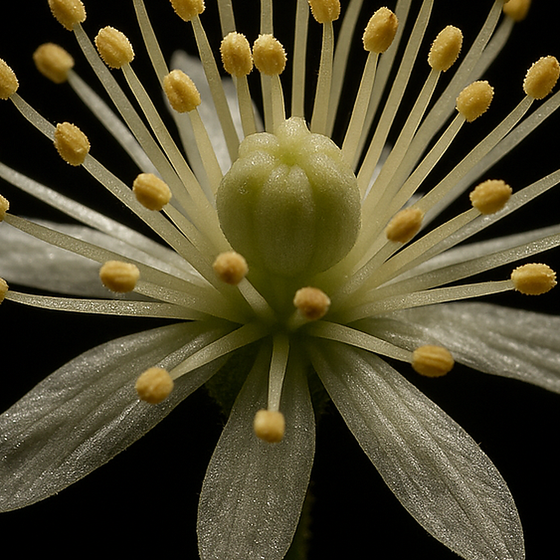
Цвіт лічі

АкордКВІТИквітковий · фруктовий · солодкий
Ноти серцяПіраміда
—Сила
—Стійкість
1Походження
Зразок
Цвіт лічі як парфумерна сировина
Ноти серця
Litchi chinensis
Фантазійний/концептуальний
Визначення

Litchi blossom refers to the flowers of the lychee tree, Litchi chinensis, a member of the soapberry family, Sapindaceae. The small white, yellow, or green flowers are distinctively fragrant.

КВІТКОВИЙ СОЛОДКИЙ ФРУКТОВИЙ
Type
Акорд
Olfactive family
Квіткові
Source
Flowers of the lychee tree, Litchi chinensis
Інструменти
Піраміда
ВВерхні ноти
СНоти серця
ББазові ноти
Країни-виробники
Китай

Запах

The small flowers of the lychee tree are distinctively fragrant. The fruit of the same tree has a sweet, mildly tart flavour and a floral aroma often described as rose-like, and its odour has also been called honey, rose-floral and citrus-fruity. In a sensory panel of the fruit, floral was the most intense aroma attribute, followed by tropical fruit, peach and apricot, and honey, while sweetness was the strongest flavour attribute. Among the aroma compounds of the fruit, geraniol is sweet and floral with a rose-like scent, linalool is floral with sweet and citrus facets, and furaneol is sweet and caramel-like.

Докладно

The tree and its flowers

Litchi chinensis is the sole member of the genus Litchi, which belongs to the soapberry family, Sapindaceae. The flowers grow on a terminal inflorescence with many panicles on the current season's growth. The panicles grow in clusters of 10 or more, reaching 10 to 40 cm (3.9 to 15.7 in) or longer.

There are three distinct flower types, two male types and one female, borne on the same panicle. The flowers are generally recognised as self-sterile, and insects are beneficial because they carry pollen from anther to stigma. The honey bee is widely recognised as the principal pollinator.

The tree is evergreen and is frequently less than 15 m tall, sometimes reaching 28 m. Three subspecies are told apart by flower arrangement, twig thickness, fruit and the number of stamens; in subspecies chinensis the flowers typically have six stamens. Flowering varies between growing regions but usually occurs over a 6 week period between July and October. The flowers open in a usual sequence over 2 to 6 weeks: male flowers first, then female hermaphrodite flowers that set fruit, and finally male hermaphrodite flowers that do not set fruit.

Volatiles and aroma compounds

The volatile profile of the fruit differs from that of the male and female flowers. The flowers were examined at the bud stage, half open and in full bloom.

Analysis of the litchi genome revealed 38 terpene synthase genes. Five of them were associated with monoterpenes, and the others with sesquiterpenes.

Aroma-active compounds in the flesh of the lychee fruit include the monoterpenes linalool, geraniol, nerol, limonene, and cis-rose oxide, which contribute rose-like and citrus-like notes.

Отримання й хімія

Спосіб отримання

The aroma of the fruit has been isolated with a solvent extract using solvent-assisted flavour evaporation and then analysed by gas chromatography-olfactometry.

Ботанічна назва
Litchi chinensis
Зовнішній вигляд
Small white, yellow, or green flowers
Статус IFRA
Див. примітку

No IFRA Standard for the material itself (51st Amendment)

У парфумерії

Rose oxide, a fragrance chemical found in roses and rose oil, also contributes to the flavour of some fruits, such as lychee. In studies of Muscaris grapes, the distinct lychee note came from the combination of (2S,4R)-rose oxide and geraniol. The rose oxide was the only odorant with a specific lychee-like odour, whereas geraniol alone smelled floral and rosy but not distinctly of lychee. The Gewürztraminer grape shares its aroma compounds with lychee.

Роль у формулі
01підсилювач дифузії
02модифікатор
03фірмова нота
04сполучний компонент
05свіжість
Форми випуску
синтетичний акорд фантазійна нота

Див. також

7 ноти