Пилок

АкордНАТУРАЛЬНІ Й СИНТЕТИЧНІ, ПОПУЛЯРНІ Й НЕЗВИЧНІквітковий · солодкий · пудровий
Ноти серцяПіраміда
—Сила
—Стійкість
—Походження
Зразок
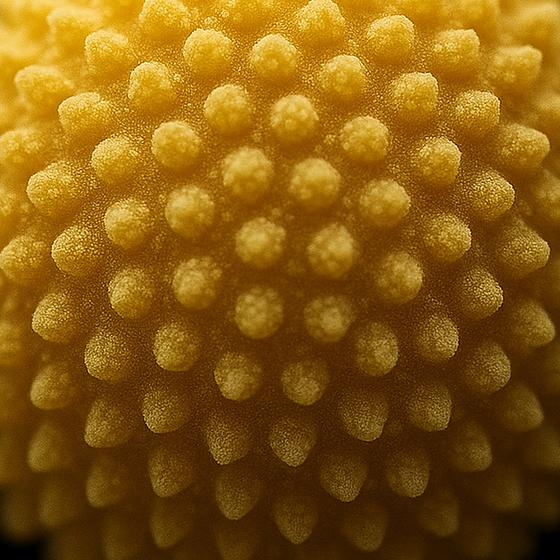
Пилок як парфумерна сировина
Ноти серця
Фантазійний/концептуальний
Визначення

Pollen consists of pollen grains, which produce male gametes (sperm cells) in flowering plants and gymnosperms.

КВІТКОВИЙ ЗЕЛЕНИЙ СОЛОДКИЙ ПУДРОВИЙ ГУРМАНСЬКИЙ ТЕПЛИЙ СВІЖИЙ
Type
Акорд
Olfactive family
Гурманські
Source
Flowering plants and gymnosperms
Інструменти
Піраміда
ВВерхні ноти
СНоти серця
ББазові ноти

Запах

Bee pollen has six principal odour characters: green/sour, fruity, spicy/herbal, earthy/mushroom, sweet/baked/caramel/honey and floral. Mushroom-like notes are consistently present, at medium to strong intensity. Bee pollens are not made only of pleasant-smelling compounds.

Докладно

Pollen is a gametophyte, something that could be considered an entire organism, which then produces the male gamete. Individual pollen grains are small enough to require magnification to see detail. Pollen grains come in a wide variety of shapes, sizes, and surface markings characteristic of the species. The smallest pollen grain, that of the forget-me-not (Myosotis spp.), is 2.5-5 μm (0.005 mm) in diameter, while corn pollen grains are large, about 90-100 μm.

The hard coat of a pollen grain is made of sporopollenin, which protects the gametophytes during their movement from the stamens to the pistil of flowering plants. Except in some submerged aquatic plants, the mature pollen grain has a double wall. The inner wall is a thin layer of unaltered cellulose called the intine, and the tough outer wall, called the exine, is composed largely of sporopollenin. The exine often bears spines or warts or is variously sculptured, and these markings often help identify the genus, species, or even cultivar or individual.

Sporopollenin is a biological polymer that forms a major part of the tough outer walls of plant spores and pollen grains. Analyses show a complex biopolymer containing mainly long-chain fatty acids, phenylpropanoids, phenolics and traces of carotenoids in a random co-polymer. Good evidence points to a composition that varies from one plant to another, which suggests a class of related compounds, not a single fixed structure. Its phenolic components absorb both UVA and UVB, protecting internal cell components including DNA against ultraviolet damage.

The odors of pollen originate from pollenkitt, a sticky, oily coating of lipids and pigments that loosely covers the surface of the grains of many plants. Three major classes of compounds were reported in pollen floral scents: fatty-acid derivatives, isoprenoids, and benzene derivatives. The headspace volatiles of bee pollen are mainly lower aliphatic compounds, monoterpenes and benzene derivatives.

The transfer of pollen grains to the female reproductive structure is called pollination. Anemophilous plants typically produce great quantities of very lightweight pollen grains. The study of pollen is called palynology and is highly useful in paleoecology, paleontology, archaeology, and forensics. Pollen can be used for biostratigraphy and to gain information about the abundance and variety of plants alive, which can yield important information about paleoclimates.

Bee pollen is a ball or pellet of field-gathered flower pollen packed by worker honeybees and used as the primary food source for the hive. The exact composition of bee pollen depends on the plants from which the bees gather it.

Explore all seven extraits in the Discovery Set.

—

Related: Acetyl Furan · Ambermax · Ambrofix · Egg · Ethyl Maltol · Flour · Furfural · Genepi

Цікавий факт

Sporopollenin has been described as the toughest material in the plant kingdom. The sporopollenin-rich walls of pollen grains can persist in the fossil record for hundreds of millions of years, since sporopollenin resists chemical degradation by organic and inorganic chemicals.

Отримання й хімія

Спосіб отримання

Honey bees collect pollen from plant anthers, mix it with a little salivary secretion or nectar, and carry it in baskets on their hind legs. To identify volatile compounds derived specifically from pollen, hand-collected pollen is preferred over bee-collected pollen.

Формула
Complex natural mixture (key constituents: sporopollenin)
Зовнішній вигляд
Grains differing in shape, color, size and weight depending on the plant species
Статус IFRA
Див. примітку

No IFRA Standard for the material itself (51st Amendment)

Див. також

6 ноти