


Цвіт граната
АкордКВІТИквітковий · фруктовий · солодкий
Ноти серцяПіраміда
—Сила
—Стійкість
10Походження
Зразок
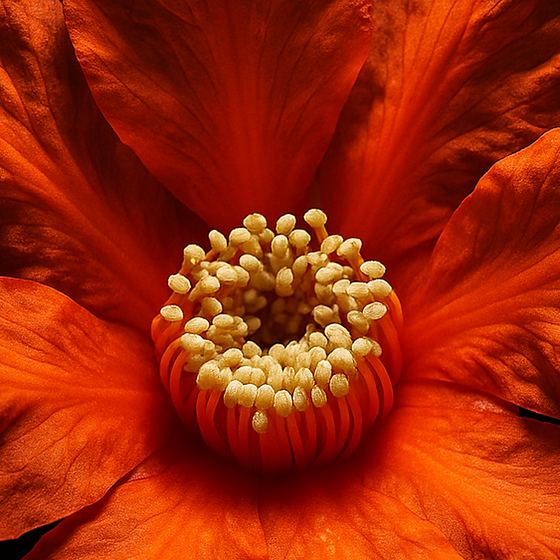
Punica granatum
Фантазійний/концептуальний
Визначення
Pomegranate blossom is the flower of Punica granatum, a deciduous shrub or tree of the family Lythraceae.
ДЕРЕВНИЙ КВІТКОВИЙ ЗЕЛЕНИЙ ПРЯНИЙ СОЛОДКИЙ ФРУКТОВИЙ СВІЖИЙ
Pomegranate flower, Golnār
- Type
- Акорд
- Olfactive family
- Квіткові
- Source
- flower
Інструменти
Піраміда
ВВерхні ноти
СНоти серця
ББазові ноти
Країни-виробники
Індія Китай Іран Туреччина Афганістан США Ірак Пакистан Сирія Іспанія
В ароматах PREMIEREPEAU
Докладно
Цікавий факт
A petroglyph at Persepolis shows a pomegranate flower in the hand of an Achaemenian king.
Отримання й хімія
Спосіб отримання
The volatiles of the plant parts of Punica granatum, the flower organs among them, were extracted by headspace solid phase micro-extraction (HS-SPME) and analysed by gas chromatography-mass spectrometry (GC-MS).
- Формула
- Complex natural mixture (key constituents: β-caryophyllene; (E,E)-α-farnesene; trans-α-bergamotene)
- Ботанічна назва
- Punica granatum
- Зовнішній вигляд
- Bright red or white flowers, 3 cm or more in diameter, with three to seven petals
- Синоніми
- Pomegranate flower, Golnār
Статус IFRA
Див. приміткуNo IFRA Standard for the material itself (51st Amendment)
Див. також
7 ноти