


Сосна звичайна
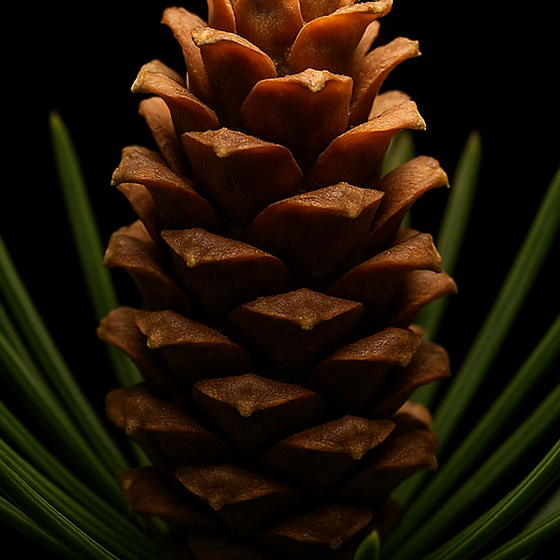
Resinous, turpenic, cold-forest air. Scots pine smells like walking through a northern European conifer plantation -- needle-sharp, balsamic, with the clean bite of alpha-pinene.
- Type
- Складник
- Olfactive family
- Деревні
- Source
- wood
- Chemical class
- complex natural (essential oil)
Запах
Теруар і зрілість
Докладно
Отримання й хімія
Спосіб отримання
Steam distillation of needles and twigs of Pinus sylvestris. Oil yield approximately 0.2-0.5%. The oil is colourless to pale yellow with a strong, fresh, piney-balsamic odour. Major production in Russia, Scandinavia, and Austria.
- Формула
- Complex mixture — key components: alpha-Pinene (C₁₀H₁₆), delta-3-Carene (C₁₀H₁₆), beta-Pinene (C₁₀H₁₆)
- CAS
- 8023-99-2 (Scots pine essential oil)
- Ботанічна назва
- Pinus sylvestris L. (Scots pine)
- Зовнішній вигляд
- Pale yellow to amber viscous liquid
- Сила запаху
- Середня
- Синоніми
- PINUS SYLVESTRIS PINE OIL SCOTS PINE
No IFRA Standard for the material itself (51st Amendment)
- Температура спалаху
- ~38°C
- Відносна густина
- 0.860–0.885 @ 25°C
- Показник заломлення
- 1.473–1.480 @ 20°C
У парфумерії
Scots pine (Pinus sylvestris) oil is the archetype of pine freshness: alpha-pinene (piney), delta-3-carene (sweet-turpenic), bornyl acetate (camphorous). Functions as a fresh, resinous top-to-heart note. Central to fougere, aromatic, and forest compositions. Regional chemotype variations (Scandinavian vs. southern European) offer subtle olfactory differences.
Див. також
7 ноти