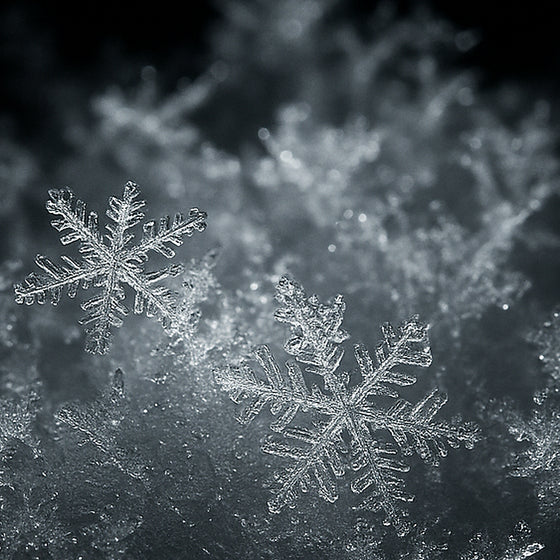
The smell before snowfall
Air smells different before it snows both because of what it contains and what it lacks. Cold air is dry, and that lack of humidity can stifle the sense of smell because the mucus around the olfactory receptors dries up. In the run-up to a snowstorm, humidity rises and atmospheric pressure changes, and the rise in humidity subtly changes the smell of the air.
The cold and the pressure change also stimulate the trigeminal nerve, which is not responsible for smells but provides sensations associated with them. Trigeminal nerve stimulation is why mint smells cool. Together with the subtle changes in the air, this lets the human nervous system sense a difference in the weather, which may account for the perceived smell of snow.
Fallen snow
Once snow is on the ground, it can take on new smells that are primarily influenced by its location. Ice crystals readily absorb molecules from the air, especially volatile organic compounds. Snow in rural areas typically absorbs molecules from trees, grass, and other plants. Snow that falls on trees carries terpenes from the plants, including pinenes, limonene, myrcene, phellandrene, and camphene. Snow on the ground likely contains pollutants from the air, which can affect its scent.
Why winter air smells cleaner
Cold air holds fewer molecules than warm air, which directly affects how scents travel. Temperature also slows the evaporation of certain volatile compounds, so fewer smells are present in the air. When it is cold outside, the olfactory receptors nestle deeper in the nose as a protective response, which makes it harder for odor molecules to cling. Dry winter air can also make some scents, such as wood smoke, seem more intense, because moisture dilutes them less.
What snow takes from the air
Falling snow filters dust, soot and volatile organic compounds out of the air. Some of these compounds, such as benzene, pesticides and trichloroethene, may be toxic or carcinogenic. Snow is particularly effective at removing automobile exhaust.
Explore all seven extraits in the Discovery Set.
—
Related: Aldron · Ambretone · Ambrette Musk Mallow · Ambrettolide Natural Musk · Ambrinol · Coral Reef · Cyclopentadecanolide · Exaltolide