Tonalide®

СинтетичнийПОПУЛЯРНІ Й НЕЗВИЧНІмускусний · пудровий · солодкий
Базові нотиПіраміда
3/5Сила
—Стійкість
1Походження

Редакційна приміткаМи не маємо жодних прав на цей матеріал, його назву чи торговельну марку. Ця стаття глосарію є незалежною редакційною журналістикою й опублікована на підставі свободи вираження поглядів.
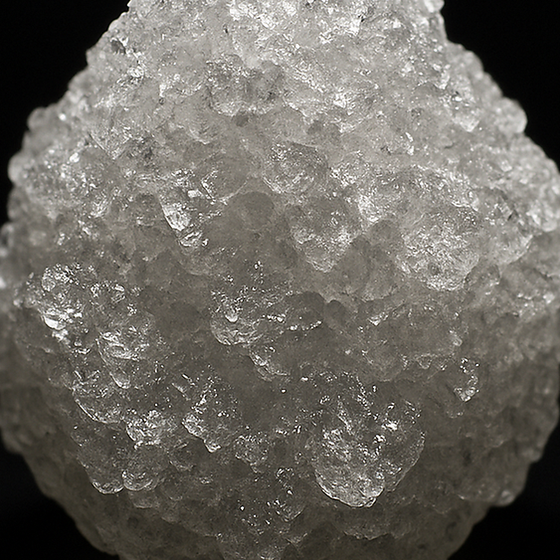
Зразок
Tonalide® як парфумерна сировина
Базові ноти
Визначення

Tonalide is a bicyclic acetyltetralin musk and a synthetic polycyclic musk. Its odour is musky, dusty, dry-woody and ambery.

МУСКУСНИЙ СОЛОДКИЙ ПУДРОВИЙ СУХИЙ ДЕРЕВНИЙ АМБРОВИЙ ЗЕМЛИСТИЙ
AHTN, Fixolide, Tonalid, Tetralide, Tentarome, musk tonalid, acetyl hexamethyl tetralin
Type
Складник
Olfactive family
Амброві й мускусні
Source
synthetic molecule (polycyclic musk)
Chemical class
synthetic aroma chemical
Інструменти
Піраміда
ВВерхні ноти
СНоти серця
ББазові ноти
3/5Сила
Середня
інтенсивність запаху
Країни-виробники
Produced in one plant in The Netherlands (1000 to 5000 tonnes per year)

Запах

Tonalide has a tenacious, sweet-musky scent. At higher concentrations its odour shows dusty, woody and amber facets, and below 5% it becomes notably soft-musky and pleasant. The full odour profile is musky, dusty, humid, dry-woody, ambery, earthy and crystalline. The odour is soft, persistent and musky, with an earthy-ambery dimension. It is a non-animalic musk. The (3S)-enantiomer has a strongly musky odour, while the (3R)-isomer is described as light and aromatic.

Докладно

Chemistry

Tonalide is a member of the tetralins. Among the classes of synthetic musks, it belongs to the hydronaphthalenes. Its IUPAC name is 1-(3,5,5,6,8,8-hexamethyl-6,7-dihydronaphthalen-2-yl)ethanone. Two different CAS numbers exist for it, because one company reported an erroneous molecular structure and a second company the correct one. Tonalide is moderately volatile and slightly soluble in water. It is stable under recommended storage conditions.

Production volume

AHTN was identified as a high production volume chemical by the OECD in 2004. It is the second highest volume polycyclic musk in global production, after galaxolide, with 247 tonnes used in Europe in 2004. Circa 62% of the production volume was exported outside Europe.

Occurrence and fate in the environment

Wastewater treatment plant effluent is a major source of synthetic musk fragrances to the environment. In such effluent, HHCB and AHTN are normally found in the highest concentrations, typically on the order of 1000 ng/L to 5000 ng/L. Synthetic musk concentrations in effluent leaving a treatment plant are typically less than 30% of those in the influent. The removal of HHCB and AHTN from wastewater is primarily to sludge. There is little evidence that synthetic musk fragrances are degraded during wastewater treatment. In surface waters of the Ruhr megalopolis, about 10 ng/L AHTN was found as a typical riverine concentration in the part of the river where drinking water is extracted. The sewage treatment plants were the dominant source of these pollutants there. In sludge-amended soils, the concentration of HHCB dropped below measurable levels in one year. AHTN was lost more slowly and was still above detection limits after one year. Synthetic musks are lipophilic compounds and tend to deposit and persist in fat tissues. An environmental assessment found tonalide persistent and toxic to the environment, but not bioaccumulative. Its measured bioconcentration factors in fish are below 2000 L/kg. On a weight of evidence, AHTN is not endocrine disrupting. Germany has nevertheless scheduled it for re-evaluation in the Rolling Action Plan, as a potential endocrine disruptor and because of its high aggregated tonnage. The environmental risk assessment for AHTN and HHCB found sufficient data to assess the environmental risks. Risk ratios are generally below 1, but for sediment organisms living in areas contaminated with a high effluent load they may be above 1.

Human exposure and safety

In a survey of consumer products, AHTN ranged from under 5 ng/g to 451 μg/g. The highest concentrations were found in perfumes, body creams and lotions, and deodorants. Tonalide has been detected in human breast milk, adipose tissue and blood. Reported concentrations in whole milk ranged between 0.59-53 μg/kg, and in adipose tissue between 1-72 μg/kg fat. The oral LD50 values for AHTN ranged from 570-1377 mg/kg bw, and the dermal LD50 values are above 5000 mg/kg bw. AHTN is not a skin or eye irritant. No sensitisation reactions were seen in three separate human repeated insult patch test studies at concentrations between 2-10 % in a total of 188 human subjects. AHTN is a non-genotoxic substance.

Explore all seven extraits in the Discovery Set.

Цікавий факт

Synthetic musks are used to mask chemical odours in products labelled "unscented", though they are not added to products labelled "fragrance-free". Musk ingredients are often not listed on product labels, or appear only as "fragrance" or under the trade names galaxolide (for HHCB) or tonalide (for AHTN).

Отримання й хімія

Спосіб отримання

Tonalide is made by acetylating 1,1,3,4,4,6-hexamethyl-1,2,3,4-tetrahydronaphthalene, known as HMT, to give 7-acetyl-1,1,3,4,4,6-hexamethyl-1,2,3,4-tetrahydronaphthalene. HMT is made by reacting p-cymene with a 2,3-dimethylbutene, using a catalytic amount of anhydrous aluminium halide in the presence of an organohalogen compound. Of the two 2,3-dimethylbutenes, 2,3-dimethyl-1-butene gives better results. Anhydrous aluminium chloride and aluminium bromide give the best results. Paraffin solvents such as cyclohexane and n-hexane are preferred to halogen-containing solvents for safety and process engineering, with a high yield near room temperature. In one example, HMT was obtained in 62% yield based on 2,3-dimethyl-1-butene, with a purity of 96%. In the acetylation example, HMT was treated with acetyl chloride and anhydrous aluminium chloride in dichloroethane at 20 °C.

Формула
C₁₈H₂₆O
CAS
21145-77-7
Зовнішній вигляд
White to off-white crystalline solid
Сила запаху
Середня
Синоніми
AHTN, Fixolide, Tonalid, Tetralide, Tentarome, musk tonalid, acetyl hexamethyl tetralin
Статус IFRA
Див. примітку

No IFRA Standard for the material itself (51st Amendment)

Фізичні властивості
Температура кипіння
326 ± 4 °C at atmospheric pressure
Температура плавлення
54.5 °C

У парфумерії

AHTN is used to make a fragrance long lasting and to bring its initial and residual smell into harmony. AHTN and HHCB are important fragrance ingredients because of their typical musky scent and their fixative properties. AHTN is an ingredient of fragrance preparations used in perfumes, cosmetics, household and laundry cleaning products and air fresheners. The level of AHTN in such preparations is typically several percent. The majority is assumed to be used in household products, based on the relative volume of sales of such products. Studies have identified tonalide, galaxolide or both in almost all sampled household products with added fragrances. Synthetic musks in general supply the base note of many perfume formulas.

Роль у формулі
01фіксатор
02модифікатор
03кістяк
04сполучний компонент
05формувач об’єму
Форми випуску
стандартна форма

Див. також

6 ноти