Гіацинтоїдес

АкордКВІТИквітковий · зелений · свіжий
Ноти серцяПіраміда
—Сила
—Стійкість
—Походження
Зразок
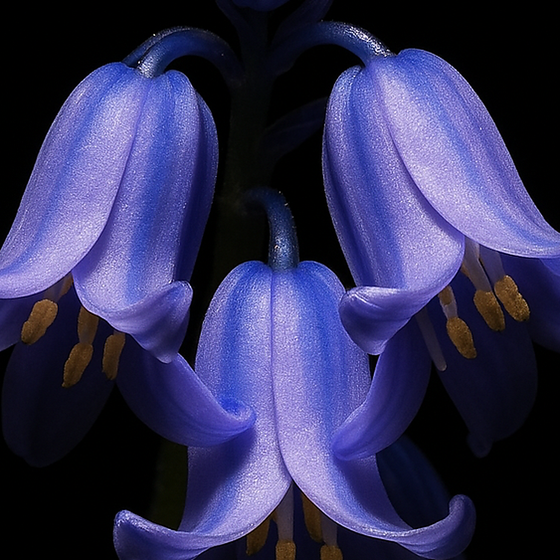
Гіацинтоїдес як парфумерна сировина
Ноти серця
Hyacinthoides non-scripta
Визначення

Bluebell is an accord, a blend built to evoke the scent. It smells dewy and green-floral, fresh and lightly sweet, like wildflowers in a damp wood.

КВІТКОВИЙ ЗЕЛЕНИЙ СОЛОДКИЙ СВІЖИЙ
Common bluebell, English bluebell, British bluebell, wild hyacinth
Type
Акорд
Olfactive family
Квіткові
Chemical class
Accord
Інструменти
Піраміда
ВВерхні ноти
СНоти серця
ББазові ноти

Запах

Dewy and green-floral, fresh and lightly sweet, like wildflowers in a damp wood. The natural aroma of the flower is soft and layered, with a quiet green feel like fresh leaves or damp flower petals. The sweetness is gentle rather than sugary, and the scent leans toward watery florals with a light, earthy edge. Its presence is subtle, leafy and slightly sweet.

Докладно

Bluebell (Hyacinthoides non-scripta) is a bulbous perennial plant found in Atlantic areas from the north-western part of the Iberian Peninsula to the British Isles. In spring it bears a nodding, one-sided cluster of 5-12 tubular, sweet-scented violet-blue flowers. In perfumery, bluebell is an accord, a blend built to evoke its scent.

The species is native to the western parts of Atlantic Europe, from north-western Spain and north-western Portugal to the Netherlands, Great Britain and Ireland. It is estimated that 25%-50% of all common bluebells may be found in Britain and Ireland. It is particularly associated with ancient woodland, where it may dominate the understory and form carpets of violet-blue flowers.

The Spanish bluebell (Hyacinthoides hispanica) occurs as an introduced species in Britain and Ireland. Its flowers are paler than those of the native bluebell, with less recurved tepals, and are only faintly scented. The two species hybridise readily to produce fertile offspring.

Bluebell flowers from mid-April to late May and grows in broadleaf woodland, fields and along hedgerows. The leaves are narrow and strap-shaped, and the flowers are usually deep violet-blue, though some are white or pink. The bulbs produce contractile roots that draw them down into deeper, moister soil, to depths of 10-12 cm. The flowers are rich in pollen and nectar and are chiefly pollinated by bumblebees.

Bluebell is not protected under international law, such as CITES or the EU Habitats Directive. In the United Kingdom it is a protected species under the Wildlife and Countryside Act 1981. Landowners are prohibited from removing common bluebells on their land for sale, and it is a criminal offence to remove the bulbs of wild common bluebells. The legislation was strengthened in 1998, making any trade in wild common bluebell bulbs or seeds an offence. Trade in wild bulbs or seeds is punishable by fines of up to £5,000 per bulb. The species is not protected in the Isle of Man or the Republic of Ireland.

—

Related: Abelia · Almond Blossom · Alpha Terpineol · Alstroemeria · Alumroot · Amarillys · Amazon Moonflower · Amethyst Flower

Цікавий факт

A bluebell seed takes at least five years to develop into a bulb. Bluebells are often used as an indicator species to identify ancient woodland. In England, ancient woodland is woodland that has existed continuously since 1600.

Отримання й хімія

Спосіб отримання

In perfumery the bluebell scent is made as an accord, a blend built to evoke the scent of the flower.

Ботанічна назва
Hyacinthoides non-scripta
Синоніми
Common bluebell, English bluebell, British bluebell, wild hyacinth
Статус IFRA
Див. примітку

No IFRA Standard for the material itself (51st Amendment)

Див. також

8 ноти