Кастореум

НатуральнийМУСКУС, АМБРОВИЙ АКОРД, ТВАРИННІ ЗАПАХИтваринний · теплий · шкіряний
Базові нотиПіраміда
—Сила
—Стійкість
1Походження
Зразок
Кастореум як парфумерна сировина
Базові ноти
Визначення

Castoreum is a yellowish exudate from the castor sacs of mature beavers, which they use in combination with urine to scent mark their territory. Its odour is described as animal, ink, leathery and phenolic.

СОЛОДКИЙ ТВАРИННИЙ ШКІРЯНИЙ ТЕПЛИЙ СМОЛИСТИЙ ДИМНИЙ ФЕНОЛЬНИЙ
Castoreum extract, castoreum absolute, castoreum liquid
Type
Складник
Olfactive family
Амброві й мускусні
Source
animal secretion (castor sacs)
Інструменти
Піраміда
ВВерхні ноти
СНоти серця
ББазові ноти
Країни-виробники
Канада

Запах

Castoreum has a warm, animal-sweet odour that becomes more pleasant on dilution. Sometimes a birch, tar-like, musky odour is also perceptible. Diluted, for example as a tincture in ethanol, it smells pleasantly of birch tar and musk and is slightly fruity. Its odour is also given as leather, smoky, animal and sweet. Castoreum is an unpleasantly sharp-smelling, oily substance. The fresh pouch has a fetid, sharp, aromatic odour.

Походження, етика й замінники

Докладно

Both beaver sexes have a pair of castor sacs and a pair of anal glands, located in two cavities under the skin between the pelvis and the base of the tail. The castor sacs are not true glands, endocrine or exocrine, on a cellular level, so the names preputial glands, castor glands and scent glands are misnomers. The castor sacs secrete castoreum, a liquid substance used mainly for marking territory. Beavers mark their territories by constructing scent mounds made of mud and vegetation, scented with castoreum. Scent marking increases in spring, during the dispersal of yearlings, to deter interlopers. Anal glands produce an oily substance which the beaver uses as a waterproof ointment for its coat. There are two extant species of beaver: the North American beaver (Castor canadensis) and the Eurasian beaver (C. fiber).

Canadian pouches are wrinkled, pear-shaped, almost flat, from 6 to 15 cm long and 4 to 8 cm wide. Siberian pouches are ovoid and smooth, slightly larger in size, but valued less commercially.

Chemical composition

At least 24 compounds are known constituents of beaver castoreum. Several of these have pheromonal activity, of which the phenols 4-ethylphenol and catechol and the ketones acetophenone and 3-hydroxyacetophenone are strongest. Five additional compounds elicit a weaker response: 4-methylcatechol, 4-methoxyacetophenone, 5-methoxysalicylic acid, salicylaldehyde and 3-hydroxybenzoic acid. There are also oxygen-containing monoterpenes such as isopinocamphone, pinocamphone, and two linalool oxides and their acetates. Other compounds are benzoic acid, benzyl alcohol, borneol, o-cresol, 4-(4'-hydroxyphenyl)-2-butanone, hydroquinone and phenol. Those compounds are gathered from plant food. Castoreum also contains nupharamine alkaloids, castoramine and cis-cyclohexane-1,2-diol.

A resinous and crystalline material (1 to 2%) has been identified in castoreum, together with a butter-like portion containing albumins, fats, urates, salts and probably cholesterols. Castoreum contains castorin (0.33 to 2.5%), volatile oil (1 to 2%), benzoic acid, salicylic acid and cinnamic acid, among other constituents. The intense, leathery odour of castoreum obtained from Siberian beavers is caused largely by phenolic compounds, such as 4-alkylphenols and catechol derivatives, which the beavers take in with their food and excrete into their abdominal pouches.

One minor component, 5-(3'-furyl)-8-methylindolizidine, is a nupharamine that makes up less than 0.0002% of castoreum. It has an indolizidine skeleton, a ring system made of one six-membered and two five-membered rings. Researchers at the University of Mainz in Germany determined the stereochemistry of this component by total synthesis, and the all-cis form proved identical to the natural product.

Food regulation and other uses

In the United States, the Food and Drug Administration lists castoreum extract as a generally recognized as safe (GRAS) food additive. In 1965, castoreum extract and castoreum liquid were added to the GRAS program (FEMA 2261 and 2262). Castoreum extract is rarely used as a food additive. Castoreum was also considered as an ingredient to flavour and scent cigarettes.

—

Related: Aldambre · Ambrarome · Ambrein · Ambreine · Ambrettolide · Ambronova · Ammonia · Animal Notes

Цікавий факт

At present the annual industry consumption of castoreum in food is very low, around 100 kilograms, whereas vanillin is over 1.2 million kg annually. In Sweden, castoreum has traditionally been used to flavor a variety of snaps commonly called Bäverhojt. Historically, compounds isolated from castoreum were used in strawberry and raspberry flavorings and vanilla substitutes. Medieval beekeepers used castoreum to increase honey production.

Отримання й хімія

Спосіб отримання

In perfumery, castoreum means the resinoid extract obtained from dried beaver castor tinctured in alcohol. The dried castor sacs are generally aged for two or more years to mellow them. Castoreum is removed from the animal during the skinning period and is dried in the sun or sometimes over burning wood. The beaver pouches are dried in the air or over a wood fire, and their contents change from yellow to dark brown and from a butter-like to a resinous consistency. Castoreum is a by-product of the fur industry. It is prepared by direct extraction with hot alcohol. It is not a true absolute and is not clearly soluble in cold alcohol. The yield by hot alcohol extraction is about 75 to 80% of a dark-brown, soft, unctuous mass. In addition to alcoholic tinctures, castoreum is available as resinoids, which are prepared by extracting dried, comminuted pouches with suitable solvents. The absolute is made by extraction with volatile solvents followed by a purification in alcohol. Today there are special beaver farms where beavers rub their secretions onto collection containers.

Формула
Complex natural mixture (key constituents: 4-ethylphenol; catechol; acetophenone; 3-hydroxyacetophenone C₈H₈O₂; benzoic acid)
CAS
8023-83-4
Зовнішній вигляд
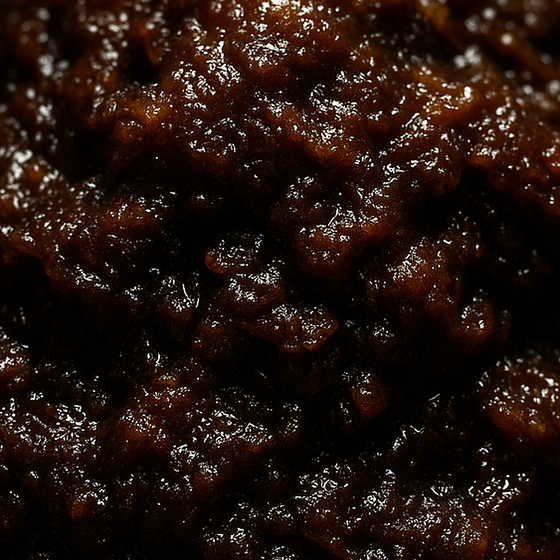
Dark brown semi-solid to solid (absolute); yellow with the consistency of syrup when fresh, dark red or brown with the consistency of hard wax when dry
Синоніми
Castoreum extract, castoreum absolute, castoreum liquid
Статус IFRA
Див. примітку

No IFRA Standard for the material itself (51st Amendment)

Фізичні властивості
Температура спалаху
> 200.00 °F

У парфумерії

Castoreum is used largely for a note that suggests leather. It is typically blended with other materials, among them top, middle and base notes. It was used mainly in fine fragrances for its long-lasting odour, particularly for delicate leather nuances. Castoreum is also used as a tincture in some perfumes.

Роль у формулі
01фіксатор
02модифікатор
03сполучний компонент
04формувач об’єму
Форми випуску
стандартна форма

Див. також

7 ноти