Китайські лікарські трави

АкордЗЕЛЕНІ НОТИ, ТРАВИ Й ФУЖЕРНІ АКОРДИзелений · землистий · насичений
Ноти серцяПіраміда
—Сила
—Стійкість
1Походження
Зразок
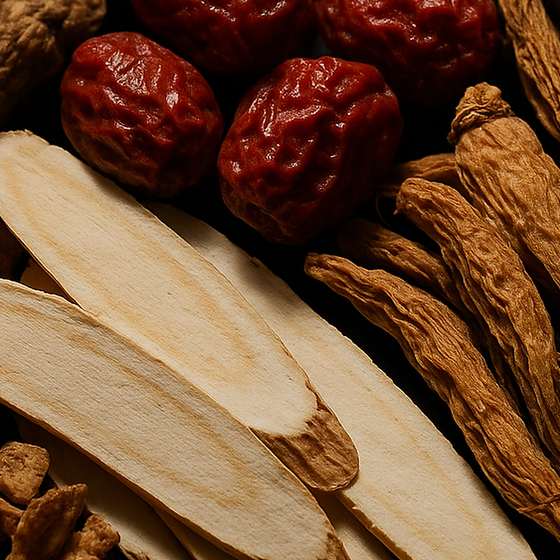
Китайські лікарські трави як парфумерна сировина
Ноти серця
N/A — diverse category (incl. Astragalus, Angelica sinensis, Glycyrrhiza, Bupleurum, etc.)
Фантазійний/концептуальний
Визначення

Chinese medicinal herbs are the substances of traditional Chinese medicine, with roughly 13,000 medicinals used in China. Plant elements and extracts are by far the most common of them.

ДЕРЕВНИЙ КВІТКОВИЙ ЗЕЛЕНИЙ ЗЕМЛИСТИЙ СОЛОДКИЙ ТРАВ’ЯНИЙ ТЕПЛИЙ СВІЖИЙ
Traditional Chinese herbs
Type
Акорд
Olfactive family
Ароматичні
Source
Mostly plant materials, with some animal, fungal and mineral products
Інструменти
Піраміда
ВВерхні ноти
СНоти серця
ББазові ноти
Країни-виробники
Китай

Запах

Borneol has a pungent, camphor-like odour. Laevo-borneol has a balsamic odour type with pine, woody and camphoraceous facets. Chuanxiong, Japanese chuanxiong, Fuxiong and Jinxiong have a similar aromatic odor.

Докладно

Over 300 herbs are in common use. Some of the most commonly used herbs are ginseng, dong quai and astragalus. Animal, fungal and mineral products are also used in TCM. Over 100,000 medicinal recipes are recorded in the ancient literature. Some TCM ingredients are known to be toxic and cause disease, including cancer.

Angelica sinensis, commonly known as dong quai, is a herb belonging to the family Apiaceae, indigenous to China. The dried root of Angelica sinensis, called Chinese angelica, is used in Chinese traditional medicine in the belief that it benefits women's health, cardiovascular conditions and other complaints. Phytochemicals contained in Angelica sinensis include phytosterols, polysaccharides, ligustilide, butylphthalide, cnidilide and isocnidilide. Ligustilide is a volatile compound, found in the essential oil of various herb roots.

Astragalus mongholicus is used in traditional Chinese medicine. Chemical constituents of the roots include polysaccharides and triterpenoids such as astragalosides, as well as isoflavones. Chuanxiong and Japanese chuanxiong are officially used in traditional medicine and recorded in the Chinese Pharmacopoeia or Japanese Pharmacopeia.

Liquorice root is one of the 50 fundamental herbs used in traditional Chinese medicine, where it has the name gancao. In Chinese medicine it is used to harmonize other herbs and to reduce the harsh effects of other herbs. Glycyrrhiza uralensis contains a glycoside that is 30-50 times sweeter than sucrose, glycyrrhizin. The root of Bupleurum chinense, known as Radix Bupleuri, is used in traditional Chinese medicine. The roots contain polyacetylenes and saponins/triterpenoids. The jujube fruit and its seeds are used in Traditional Chinese Medicine, Traditional Korean Medicine and Kampo for many purposes. The taste of chenpi is first slightly sweet, but the aftertaste is pungent and bitter. Chenpi is sun-dried mandarin orange peel used as a traditional seasoning in Chinese cooking and traditional medicine. (+)-Borneol from Dipterocarpus species is used in traditional Chinese medicine.

—

Related: Alpha Pinene · Angelica · Angelica Root · Angelica Root Oil · Artemisia · Barrenwort · Beachheather · Behini Tree

Цікавий факт

The classic Handbook of Traditional Drugs from 1941 listed 517 drugs, of which only 45 were animal parts and 30 were minerals. Gan means 'sweet', so Gan Cao is 'sweet herb', a name that suits the licorice root.

Отримання й хімія

Спосіб отримання

Liquorice root is usually collected in spring and autumn, when it is sliced and sun-dried, then either used unprepared or stir-baked with honey. Chenpi, sun-dried mandarin orange peel, is aged by storing the peels dry. Ligustilide is found in an essential oil that is obtained by distillation or supercritical CO2 extraction of the dried root.

Формула
N/A — category, not a single material
CAS
N/A — category, not a single material
Ботанічна назва
N/A — diverse category (incl. Astragalus, Angelica sinensis, Glycyrrhiza, Bupleurum, etc.)
Синоніми
Traditional Chinese herbs
Статус IFRA
Див. примітку

No IFRA Standard for the material itself (51st Amendment)

У парфумерії

Laevo-borneol (-) is used in perfumery. Of the two enantiomers of borneol, the more commercially available one today is l-borneol (-).

Роль у формулі
01модифікатор
02кістяк
03фірмова нота
04сполучний компонент
05формувач об’єму
06свіжість
Форми випуску
синтетичний акорд фантазійна нота

Див. також

7 ноти