Цвіт лимона

НатуральнийКВІТИцитрусовий · квітковий · свіжий
Верхні нотиПіраміда
—Сила
—Стійкість
—Походження
Зразок
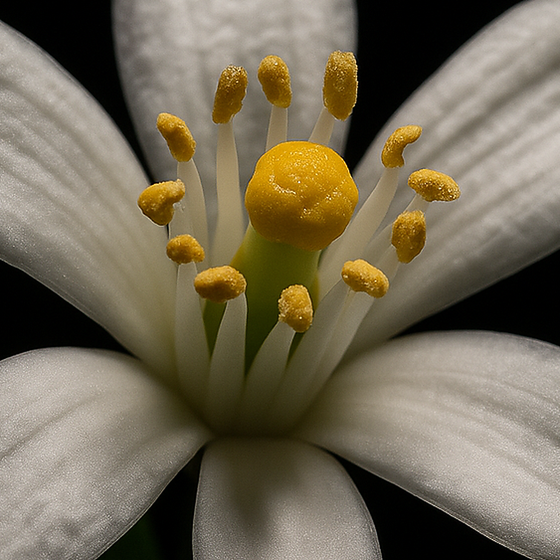
Цвіт лимона як парфумерна сировина
Верхні ноти
Citrus × limon
Визначення

Lemon blossom is the flower of the lemon tree (Citrus × limon), a small evergreen tree of the family Rutaceae.

КВІТКОВИЙ ЦИТРУСОВИЙ ЗЕЛЕНИЙ СОЛОДКИЙ СВІЖИЙ ВЕРШКОВИЙ
Type
Акорд
Olfactive family
Квіткові
Source
flower
Chemical class
monoterpene hydrocarbons and their oxygenated derivatives
Інструменти
Піраміда
ВВерхні ноти
СНоти серця
ББазові ноти

Запах

Limonene, the dominant compound in lemon flowers, has a pleasant lemon-like odor. Linalool, found in lemon flowers, has a pleasant scent that is floral with a touch of spiciness. The common d-form of limonene smells of citrus, orange, fresh, sweet and peely.

Докладно

The lemon tree

A true lemon is a hybrid of the citron and the bitter orange. Its origins are uncertain, but some evidence suggests lemons originated during the 1st millennium BC in what is now northeastern India. Lemons entered Europe near southern Italy no later than the second century AD, during the time of Ancient Rome.

Volatile composition of the flowers

Limonene is the dominant compound in the flowers of Citrus limon (36.5%) in samples from Hatay, Türkiye. In the same samples the lemon flowers also contained β-pinene (11.5%), E-citral (6.6%), β-ocimene (5.8%) and caryophyllene (4.7%). Together with the leaves of Citrus reticulata, the flowers of Citrus limon had the highest amount of total monoterpenes among the five species examined. The dominant components of lemon leaves were limonene (22.5%), E-citral (18.7%) and β-pinene (13.8%). The leaves and flowers of the citrus species gathered in Hatay were an important source of limonene and linalool.

Citrus flowers show a volatile profile different from that of the rind, and limonene is not always their major compound. Depending on the species, linalool, β-myrcene or β-citronellol may be the most prominent compounds of the flowers. Many volatile compounds of the peel have also been reported in citrus blossom and neroli, among them limonene, linalool and geraniol.

Lemon neroli and whole flowers

The neroli of C. limon differs in composition from the whole flowers: it is richer in monoterpenes such as limonene, while the whole flowers are richer in alcohol monoterpenoids such as linalool.

Compared with the rind oil

In the essential oil of citrus rinds, limonene generally represents about 60-95% of the oil, but in C. limon it can decrease down to 48%. Of the commonly studied Citrus species, lemon has the essential oil that differs most in its volatiles.

Explore all seven extraits in the Discovery Set.

—

Related: Abelia · Almond Blossom · Alpha Terpineol · Alstroemeria · Alumroot · Amarillys · Amazon Moonflower · Amethyst Flower

Отримання й хімія

Спосіб отримання

Citrus essential oils are obtained mainly from the fruit rind, although flowers or leaves have also been used.

Формула
Complex natural mixture (key constituents: limonene; linalool C₁₀H₁₈O; β-pinene)
Ботанічна назва
Citrus × limon
Статус IFRA
Див. примітку

No IFRA Standard for the material itself (51st Amendment)

У парфумерії

D-limonene, the main fragrance of citrus peels, is used in perfumery. Linalool, a terpene alcohol found in many flowers, has uses in the manufacture of fragrances. Citrus essential oils serve in natural fruity perfumes and as flavourings in food, pharmaceutical and cosmetic products.

Роль у формулі
01підсилювач дифузії
02фірмова нота
03компонент піднесення
04сполучний компонент
05свіжість
Форми випуску
неролі цілі квіти

Див. також

6 ноти