


Солодка
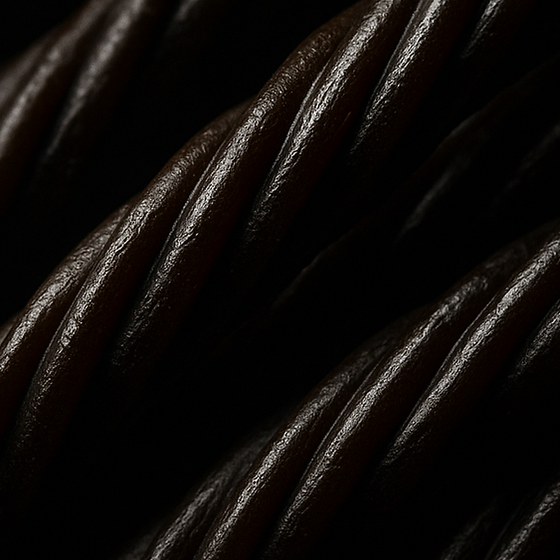
Sweet, anisic, dark. Glycyrrhiza glabra root — 50 times sweeter than sugar, with a dense, herbal-anise character and a faint woody bitterness.
- Type
- Складник
- Olfactive family
- Пряні
- Source
- seeds and dried plant parts
- Chemical class
- complex natural (essential oil)
Запах
Докладно
Цікавий факт
Glycyrrhizin in licorice root inhibits the enzyme 11-beta-hydroxysteroid dehydrogenase, which normally deactivates cortisol. Excessive licorice consumption can therefore cause cortisol to accumulate, leading to hypertension, potassium loss, and muscle weakness — a condition called pseudohyperaldosteronism.
Отримання й хімія
Спосіб отримання
CO2 extraction or solvent extraction of dried Glycyrrhiza glabra roots produces a dark, viscous extract. Steam distillation yields minimal essential oil. The CO2 extract preserves the full anethole-glycyrrhizin profile. Major production in Turkey, Iran, and China, where licorice root has been harvested for millennia.
- Формула
- C₄₂H₆₂O₁₆ (Glycyrrhizin, key sweet compound) · C₃₀H₄₆O₄ (Glycyrrhetinic acid)
- CAS
- 84775-66-6
- Ботанічна назва
- Glycyrrhiza glabra
- Зовнішній вигляд
- Pale yellow to amber liquid
- Сила запаху
- Висока
- Синоніми
- LIQUORICE
No IFRA Standard for the material itself (51st Amendment)
- Відносна густина
- 0.99130 to 1.06130 @ 25.00 °C.
- Показник заломлення
- 1.34000 to 1.39000 @ 20.00 °C.
У парфумерії
Licorice is a heart-to-base note providing sweet, anisic character with woody-rooty depth. The anethole content links it to anise, star anise, and fennel, but the woody-bitter elements distinguish it. Used in gourmand, amber, and dark-sweet compositions. Pairs with vanilla, tonka bean, and tobacco. The root extract (CO2 or absolute) provides more complexity than synthetic anethole. Also used in absinthe-themed and herbal-liqueur accords.
Див. також
6 ноти