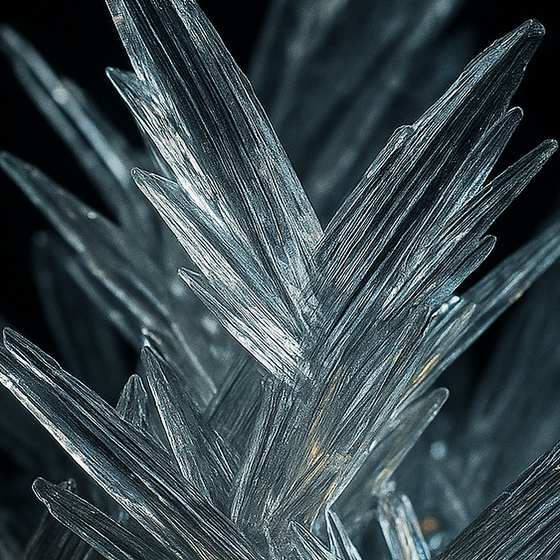
Анетол

Натуральний і синтетичнийПРЯНОЩІсолодкий · анісовий · теплий
Ноти серцяПіраміда
—Сила
—Стійкість
3Походження
Зразок
Анетол як парфумерна сировина
Ноти серця
Визначення

Anethole is an organic compound of the phenylpropanoid class that is used as a flavoring substance. Its odor is that of anise oil.

СОЛОДКИЙ ПРЯНИЙ ТРАВ’ЯНИЙ ТЕПЛИЙ
trans-Anethole, p-Propenylanisole, Isoestragole, Anise camphor, para-Methoxyphenylpropene
Type
Складник
Olfactive family
Пряні
Source
Natural isolate / Synthetic
Chemical class
phenylpropanoid
Інструменти
Піраміда
ВВерхні ноти
СНоти серця
ББазові ноти
Країни-виробники
Китай В’єтнам Іспанія

Запах

Anethole has a sweet aniseed smell and a sweet taste. It is responsible for the characteristic odor and flavor of anise.

Докладно

Anethole is an aromatic, unsaturated ether related to lignols. It is a derivative of the aromatic compound allylbenzene and occurs widely in the essential oils of plants. Its IUPAC name is 1-methoxy-4-[(E)-prop-1-enyl]benzene. It exists as cis and trans isomers, which involve the double bond outside the ring. The more abundant isomer, and the one preferred for use, is the trans or E isomer, which carries CAS number 4180-23-8. The Z isomer has CAS number 25679-28-1. Anethole that is produced synthetically, or has been exposed to UV light, can contain substantial cis-anethole, which is toxic. The presence of cis-anethole in natural anethole is used as a measure of spoilage. For industrial purposes only trans-anethole is of use, as the cis isomer has a higher toxicity and unpleasant organoleptic properties. The cis isomer melts at -22.5 °C and boils at 79 to 79.5 °C at 23 mm Hg.

Estragole is an isomer of anethole, differing with respect to the location of the double bond. Estragole converts to anethole upon treatment with potassium hydroxide.

Anethole contributes a large component of the odor and flavor of anise and fennel (both in the botanical family Apiaceae), anise myrtle, liquorice, magnolia blossoms, and star anise. Star anise contains anethole, the same compound that gives anise, an unrelated plant, its flavor. The aniseed or licorice flavor of fennel comes from anethole, an aromatic compound also found in anise and star anise. The taste and aroma of fennel are similar to those of anise and star anise, though usually not as strong. The trans-anethole content of the essential oil is given as 95% for anise, 87% for star anise and 70% for fennel. In 1999 world production was 8 tonnes for anise, 400 tonnes for star anise, mostly from China, and 25 tonnes for fennel, mostly from Spain. Anise oil also holds minor components, among them 4-anisaldehyde and estragole. Star anise is considerably less expensive to produce and has gradually displaced anise in Western markets.

Anethole is only slightly soluble in water but exhibits high solubility in ethanol. It is also miscible with chloroform and ether. Historically, its poor solubility in water was used to detect adulteration in samples. Anethole is distinctly sweet, measuring 13 times sweeter than sugar. Many people find it pleasant to the taste even at higher concentrations. In the ouzo effect, a strongly hydrophobic essential oil such as trans-anethole is dissolved in a water-miscible solvent such as ethanol, which itself forms a solution with water. When more water lowers the concentration of ethanol, the hydrophobic substance precipitates and forms an emulsion. The tiny droplets in the emulsion scatter light and so make the mixture appear white.

Analyses of anise oil give anethole as its main component, at 80 to 90 percent. Star anise comes from an evergreen tree native to South China and northeast Vietnam, and China is its main producing country, followed by Vietnam and other Southeast Asian countries. In fennel fruits, trans-anethole and estragole give a licorice-like aroma, alongside fenchone (mint and camphor), limonene and 1-octen-3-ol (mushroom).

In water at 25 °C anethole dissolves to about 0.11 g/l, and 1 ml of it dissolves in 2 ml of 96% ethanol. As a flavoring it goes into alcoholic drinks such as ouzo, rakı, anisette and absinthe, into seasoning and confectionery applications such as German Lebkuchen, and in small quantities into natural berry flavors. Anethole also acts as an insecticide, more strongly as a fumigant than as a contact agent; it is highly effective as a fumigant against the cockroach Blattella germanica and is an effective repellent against mosquitoes.

Explore all seven extraits in the Discovery Set.

—

Related: Allspice · Anise · Asafoetida · Baking Spices · Bay Leaf · Biryani · Caraway · Carolina Reaper

Отримання й хімія

Спосіб отримання

Most anethole is obtained from turpentine-like extracts from trees. Anethole can also be isolated from essential oils, which is of only minor commercial significance. Trans-anethole can be extracted from anise or fennel oils, albeit with variable proportions of the cis isomer as an impurity. Extraction of trans-anethole from natural sources cannot supply the growing market, which creates the need for a synthetic alternative. Currently, trans-anethole is obtained by estragole isomerization, promoted by an excess of NaOH or KOH. This process requires high temperatures above 200 °C, gives a low conversion of about 60% and a trans/cis ratio of 82:18, and generates significant amounts of basic wastes. Ruthenium(IV) catalysts in homogeneous systems gave conversions and trans-anethole selectivities of up to 99%. Anethole is also prepared commercially from 4-methoxy propiophenone, which is prepared from anisole. Crude anethole of 87% purity is recovered from crude sulfate turpentine by a series of fractional distillations. Crude anethole can be purified by crystallization: an aqueous emulsion of it is cooled to form crystals of purified anethole, which are separated from the liquid phase and washed with cool water. The purified product is obtained by melting the crystals at 50 °C and separating the residual water. The purity of a crude anethole with 87% anethole is improved to 99.6% anethole, with a sulfur contamination of only 100 ppm. Anise essential oil, whose main component is anethole at 80 to 90 percent, can be obtained from the fruits by steam distillation or by extraction with supercritical carbon dioxide.

Формула
C₁₀H₁₂O
CAS
104-46-1
Зовнішній вигляд
Colorless to faintly yellow liquid, or white crystals
Синоніми
trans-Anethole, p-Propenylanisole, Isoestragole, Anise camphor, para-Methoxyphenylpropene
Статус IFRA
Див. примітку

No IFRA Standard for the material itself (51st Amendment)

Фізичні властивості
Температура кипіння
234 °C
Температура плавлення
21.3 °C
Температура спалаху
195 °F

У парфумерії

Anethole is used in oral hygiene products, and demand for trans-anethole comes from food, drugs and cosmetics.

Роль у формулі
01модифікатор
02сполучний компонент
03тепло
Форми випуску
натуральний ізолят синтетична речовина

Див. також

7 ноти