


Цвіт моринги
НатуральнийКВІТИквітковий · зелений · свіжий
Ноти серцяПіраміда
—Сила
—Стійкість
—Походження
Зразок
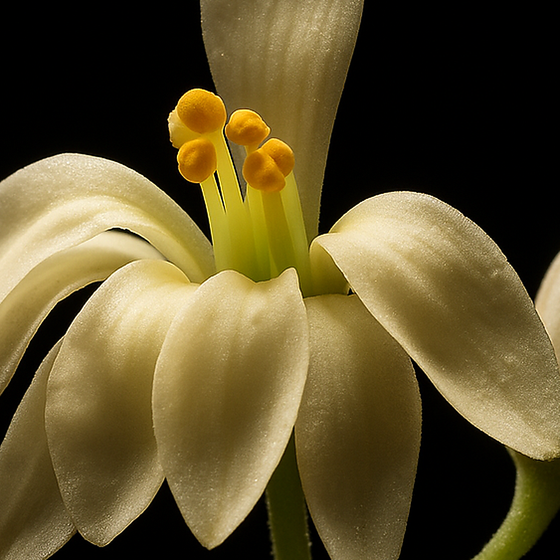
Moringa oleifera
Визначення
Moringa blossom is the fragrant flower of Moringa oleifera, the drumstick tree.
Floral96
Vert66
Doux86
Poudré42
Fruité33
Boisé29
Moringa flower
- Type
- Складник
- Olfactive family
- Квіткові
- Source
- flower
- Chemical class
- complex natural mixture (alkanes, monoterpenes, aldehydes)
Інструменти
Піраміда
ВВерхні ноти
СНоти серця
ББазові ноти
Запах
В ароматах PREMIEREPEAU
Теруар і походження
Докладно
Цікавий факт
Theophrastos, in the fourth century BC, had very strong opinions about which oils to use to make perfumes, and ben oil was firmly at the top of the list. Ben oil had a reputation for being extremely durable and was often used to lubricate fine mechanics, clocks for example.
Отримання й хімія
Спосіб отримання
Hydrodistillation of 100 g of fresh flowers in a Clevenger system for 4 hours gave an oil, and the hexane extract was made by macerating 200 g of the flowers in n-hexane. The yields of the hydrodistilled oil and the n-hexane extract were 0.005% and 0.25% w/w, respectively.
- Формула
- Complex natural mixture (key constituents: (E)-2-hexenal C₆H₁₀O; 2-pentylfuran C₉H₁₄O)
- Ботанічна назва
- Moringa oleifera
- Зовнішній вигляд
- Fragrant yellowish-white flowers in spreading or drooping clusters
- Синоніми
- Moringa flower
Статус IFRA
Див. приміткуNo IFRA Standard for the material itself (51st Amendment)
Див. також
7 ноти