Цвіт білого чаю

НатуральнийКВІТИквітковий · свіжий · зелений

Сім ароматівОдин із них дивиться на вас

Ноти серцяПіраміда
5/5Сила
—Стійкість
3Походження
Зразок
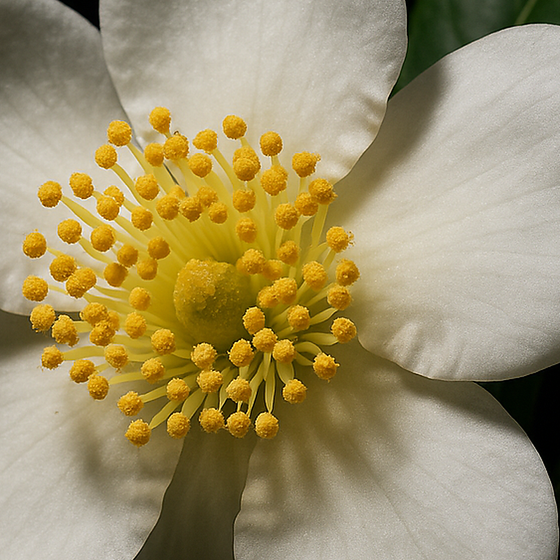
Цвіт білого чаю як парфумерна сировина
Ноти серця
Camellia sinensis
Визначення

White tea blossom is the flower of the tea plant, Camellia sinensis. Half-opened and fully opened tea flowers have floral, powdery or almond-like odors.

Floral
94
Vert
61
Doux
56
Poudré
47
Fruité
29
Boisé
32
tea flower
Type
Складник
Olfactive family
Квіткові
Source
flower
Chemical class
Alcohols, aldehydes and heterocyclic compounds
Інструменти
Піраміда
ВВерхні ноти
СНоти серця
ББазові ноти
5/5Сила
Дуже висока
інтенсивність запаху
Країни-виробники
Китай Японія Індія

Запах

Half-opened tea flowers have strong floral and almond-like odors. Fully opened tea flowers have strong powdery and moderate floral odors. Volatile compounds with green or fatty odors are abundant in the initial stages of blossoming.

Теруар і походження

Докладно

The tea plant, Camellia sinensis, is an evergreen shrub of the family Theaceae. Its leaves are brewed into tea. The flowers are white, 2.5 to 3.5 cm across, with six to eight petals. They bud in the leaf axils and can be solitary or have up to three in a cluster.

Volatile compounds

Tea flowers have been examined at three blooming stages: unopened buds, half-opened flowers and fully opened flowers. Their volatiles are dominated by alcohols, aldehydes and heterocyclic compounds, with variations across stages. Linalool is the only volatile compound with an ACI above 27 in all samples. Half-opened flowers have the most volatile compounds, including high levels of linalool and its oxides. In half-opened flowers, acetophenone, which imparts a sweet odor, is the most prominent aroma contributor. Phenylethyl alcohol and methyl salicylate are notable contributors in fully opened flowers. Fully opened flowers scored 7.39 for powdery odor in sensory evaluation, and this powdery odor could add a note to beverages and other products.

Tea flowers on the plant

Tea plant blossoming generally occurs from September to December. Since asexual propagation was applied to tea plants, the flowers have been regarded as a waste resource that competes with the leaves for water and nutrients. Chemicals such as ethephon and α-naphthalene acetic acid have been used to suppress blossoming, to promote the yield and quality of tea leaves. The yield of tea flowers is 3000 to 12,000 kg per year per hectare of plantation. Fresh tea flowers, especially open flowers, have high water content and very active polyphenol oxidases, so they oxidize easily and turn brown. Flowers at the unopened stage can be stored easily for a relatively long time.

White tea

White tea generally features young or minimally processed leaves of the Camellia sinensis plant. Its name derives from the fine silvery-white hairs on the unopened buds of the tea plant.

Explore all seven extraits in the Discovery Set.

—

Related: Abelia · Almond Blossom · Alpha Terpineol · Alstroemeria · Alumroot · Amarillys · Amazon Moonflower · Amethyst Flower

Отримання й хімія

Спосіб отримання

The aroma compounds of fresh tea flowers have been extracted by the HS method and analyzed by GC-MS.

Формула
Complex natural mixture (key constituents: linalool C₁₀H₁₈O; phenylethyl alcohol; methyl salicylate)
Ботанічна назва
Camellia sinensis
Зовнішній вигляд
White flowers, 2.5 to 3.5 cm across, with six to eight petals
Сила запаху
Extremely high
Синоніми
tea flower
Статус IFRA
Див. примітку

No IFRA Standard for the material itself (51st Amendment)

У парфумерії

Half-opened tea flowers, with strong floral and almond-like odors, make an ideal choice for perfumes and cosmetics to impart a fresh and inviting scent. Linalool, which is prominent in tea flowers, is used in the manufacture of fragrances.

Роль у формулі
01підсилювач дифузії
02модифікатор
03сполучний компонент
04формувач об’єму
05свіжість
Форми випуску
ефірна олія абсолют

Див. також

7 ноти