


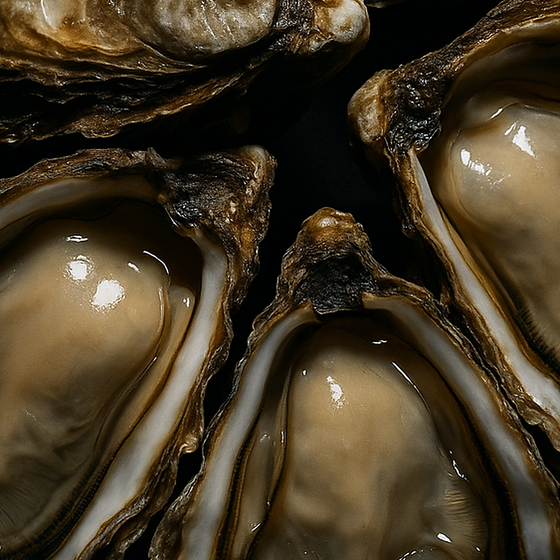
Устриці
АкордМУСКУС, АМБРОВИЙ АКОРД, ТВАРИННІ ЗАПАХИакватичний · свіжий · насичений
Ноти серцяПіраміда
—Сила
—Стійкість
—Походження
Зразок
Фантазійний/концептуальний
Визначення
True oysters are members of the family Ostreidae. Raw oysters have complex flavours that vary among varieties and regions: salty, briny, buttery, metallic or fruity.
ТВАРИННИЙ ТЕПЛИЙ СВІЖИЙ ВЕРШКОВИЙ СОЛОНИЙ МОРСЬКИЙ
- Type
- Акорд
- Olfactive family
- Амброві й мускусні
Інструменти
Піраміда
ВВерхні ноти
СНоти серця
ББазові ноти
Запах
В ароматах PREMIEREPEAU
Докладно
Отримання й хімія
Спосіб отримання
Wild oysters are harvested by gathering them from their beds, by hand or with small rakes in very shallow water, and with long-handled rakes or oyster tongs in somewhat deeper water. Pacific oysters are farmed in bottom, off-bottom, suspended and floating cultures.
Статус IFRA
Див. приміткуNo IFRA Standard for the material itself (51st Amendment)
У парфумерії
In Michael Edwards's fragrance wheel, marine and aquatic notes form a Water subfamily.
Роль у формулі
01модифікатор
02фірмова нота
03сполучний компонент
04формувач об’єму
05свіжість
Форми випуску
синтетичний акорд фантазійна нота
Див. також
7 ноти