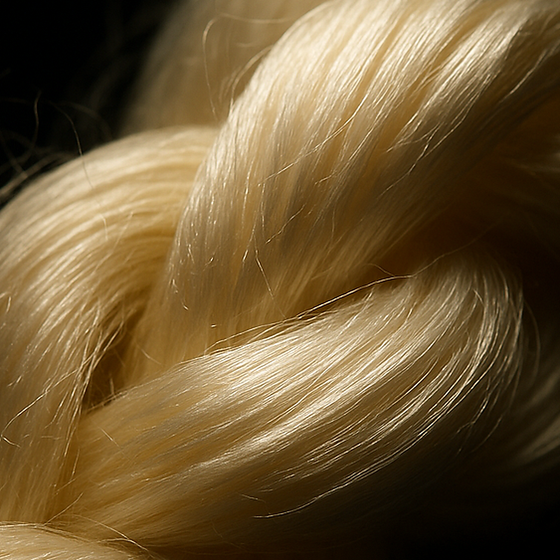
Шовк

АкордНАТУРАЛЬНІ Й СИНТЕТИЧНІ, ПОПУЛЯРНІ Й НЕЗВИЧНІтеплий · вершковий · деревний
Верхні нотиПіраміда
—Сила
—Стійкість
2Походження
Зразок
Шовк як парфумерна сировина
Верхні ноти
Фантазійний/концептуальний
Визначення

Silk is a natural protein fiber, some forms of which can be woven or knitted into textiles. It is most commonly produced from the cocoons of certain insect larvae.

АМБРОВИЙ ТЕПЛИЙ СВІЖИЙ ВЕРШКОВИЙ
Type
Акорд
Olfactive family
Деревні
Source
Cocoons of the larvae of the mulberry silkworm Bombyx mori
Chemical class
Natural protein fiber
Інструменти
Піраміда
ВВерхні ноти
СНоти серця
ББазові ноти
Країни-виробники
Китай Індія

Докладно

What silk is

The best-known silk is obtained from the cocoons of the larvae of the mulberry silkworm Bombyx mori, which are reared in captivity. The protein fiber of silk is composed mainly of fibroin (75-80%) and a smaller coating of sericin (20-25%).

Fibroin and sericin

Fibroin is an insoluble protein present in silk. Fibroin combines stiffness and toughness, and has applications in several areas, including biomedicine and textile manufacture. Sericin is the gum that coats the fibres and lets them stick to each other. In raw silk, a glue-like layer of sericin coats two filaments of fibroin called brins. Sericin is composed of 18 different amino acids, of which 32% is serine.

The fibre

Silk fibers from the B. mori silkworm have a triangular cross section with rounded corners, 5-10 μm wide. The flat surfaces of the fibrils reflect light at many angles, giving silk a natural sheen.

Production

The process of silk production is known as sericulture. Extracting raw silk starts by cultivating the silkworms on mulberry leaves. To produce 1 kg of silk, 104 kg of mulberry leaves must be eaten by 3000 silkworms.

Uses

Sericin has also been used in medicine and cosmetics. When used in cosmetics, sericin has been found to improve skin elasticity. Since the 1990s, silk has been widely studied and used as a biomaterial.

Explore all seven extraits in the Discovery Set.

—

Related: Almond Tree · Ambrox Super · Amburana Wood · Amyris · Blonde Woods · Caoutchouc · Cashalox · Cashmir Wood

Цікавий факт

One cocoon contains approximately 1,000 yards (910 m) of silk filament. About 2,500 silkworms are required to produce a pound of raw silk. It takes about 5000 silkworms to make a pure silk kimono. The silkworm completely encloses itself in its cocoon in about two or three days.

Отримання й хімія

Спосіб отримання

The sericin is removed by placing the cocoons in hot water, which frees the silk filaments and readies them for reeling. This is known as the degumming process. Unlike most other natural fibres, silk is not spun.

Зовнішній вигляд
Fine, lustrous, natural fiber
Статус IFRA
Див. примітку

No IFRA Standard for the material itself (51st Amendment)

У парфумерії

Silk is a protein fibre woven into textiles, and the IFRA library holds no standard for silk, sericin or fibroin.

Роль у формулі
01модифікатор
02фірмова нота
03сполучний компонент
04формувач об’єму
05свіжість
06компонент піднесення
Форми випуску
синтетичний акорд фантазійна нота

Див. також

6 ноти