Полин гіркий

НатуральнийЗЕЛЕНІ НОТИ, ТРАВИ Й ФУЖЕРНІ АКОРДИдеревний · зелений · ароматичний
Ноти серцяПіраміда
—Сила
—Стійкість
4Походження
Зразок
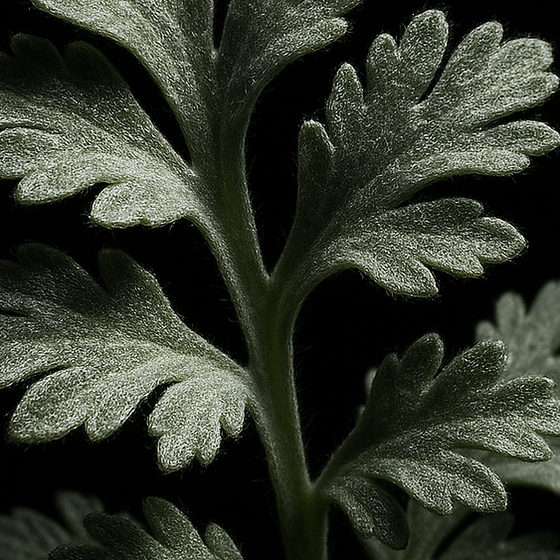
Полин гіркий як парфумерна сировина
Ноти серця
Artemisia absinthium
Визначення

Wormwood is a name for several plants of the genus Artemisia, among them Artemisia absinthium, common wormwood. Its oil is described as sweet, herbal and green.

Herbacé
90
Vert
68
Frais
71
Aromatique
49
Boisé
61
Terreux
20
common wormwood, grand wormwood, absinthe wormwood
Type
Складник
Olfactive family
Ароматичні
Source
herb
Chemical class
essential oil (mono- and sesquiterpenes)
Інструменти
Піраміда
ВВерхні ноти
СНоти серця
ББазові ноти
Країни-виробники
Франція Марокко Іспанія Сполучені Штати

Запах

Wormwood oil from America, Italy and Poland is described as sweet, herbal and green, with notes of coffee, davana, horehound and candy. Wormwood oil from Cuba is described as balsamic.

Теруар і переробка

Докладно

Artemisia absinthium, otherwise known as common wormwood, is a species of Artemisia native to North Africa and temperate regions of Eurasia. It is a herbaceous perennial plant with fibrous roots. The stems are silvery-green with a strong odor, and the leaves bear minute oil-producing glands. It is grown as an ornamental plant.

Chemistry

The herb contains bitter substances from the group of sesquiterpene lactones; absinthin, at 0.20 to 0.28%, is the main component of these bitter substances. Essential oils make up 0.2 to 0.8% of the herb and contain (-)-thujone, (+)-isothujone, thujyl alcohol and its esters, chamazulene and other mono- and sesquiterpenes. A chemotype has been discovered that does not produce β-thujone but does contain terpenoids not seen elsewhere. An oil of A. absinthium from wild plants in Iran had β-pinene (23.8%) and β-thujone (18.6%) as its main components.

Thujone is a ketone and a monoterpene that occurs predominantly in two diastereomeric forms, (-)-α-thujone and (+)-β-thujone. (-)-α-Thujone is a GABA A receptor antagonist that can cause convulsions when administered in large amounts to animals and humans. Chamazulene is an aromatic chemical compound with the molecular formula C₁₄H₁₆, found in a variety of plants including chamomile and wormwood. It is a blue-violet derivative of azulene.

History

The wormwood genus bears the name of the Greek goddess of childbirth, Artemis. The specific name derives from apsínthion, the Greek term for the plant. The word wormwood itself is an alteration of Old English wermod, which is of obscure origin. The German cognate Wermut is the source of the term vermouth, used in French and English to describe a kind of wine traditionally flavoured with wormwood.

The dark green oil produced by the plant was used to kill intestinal worms. In the Book of Revelation, a star named Wormwood falls to earth and turns a third of its waters bitter.

Valentin Magnan, who studied alcoholism, found that pure wormwood oil given to animals caused seizures independent from the effects of alcohol. By 1915, absinthe had been banned in the United States and much of Europe. It has not been demonstrated to be any more dangerous than ordinary spirits. Absinthe's revival began in the 1990s, following the adoption of modern European Union food and beverage laws that removed long-standing barriers to its production and sale.

Use in drinks

Absinthe is an anise-flavoured spirit derived from several plants, including the flowers and leaves of Artemisia absinthium, together with green anise, sweet fennel and other medicinal and culinary herbs. The plant is also used as an ingredient in some other alcoholic beverages. In the European Union, the maximum level of thujone is 35 mg/kg in alcoholic beverages prepared with Artemisia species.

Explore all seven extraits in the Discovery Set.

—

Related: Acronychia Pedunculata · Adoxal · Agave · Algae · Aloe Vera · Amyris · Aromatic Notes · Asparagus

Отримання й хімія

Спосіб отримання

The oil is distilled from the dried leaves and flowering tops of the herb. In the northern hemisphere the plant is harvested in full bloom, usually in July, and the herb is wilted for 24 hours before distillation. Direct steam gives a better oil than water distillation. Distillation appears complete after 2 hours but runs a further half hour to collect some heavy fractions.

Формула
Complex natural mixture (key constituents: thujone C₁₀H₁₆O; chamazulene C₁₄H₁₆)
Ботанічна назва
Artemisia absinthium
Зовнішній вигляд
dark green oil
Синоніми
common wormwood, grand wormwood, absinthe wormwood
Статус IFRA
Див. примітку

No IFRA Standard for the material itself (51st Amendment)

Фізичні властивості
Температура спалаху
132 °F
Показник заломлення
1.460-1.4741 (20 °C)

У парфумерії

The whole oil and its distilled fractions are the flavouring principle of vermouth.

Роль у формулі
01модифікатор
02фірмова нота
03компонент піднесення
04формувач об’єму
05свіжість
Форми випуску
ефірна олія

Див. також

6 ноти