


HerzPyramide
3/5Intensität
—Haltbarkeit
1Herkünfte
Exemplar
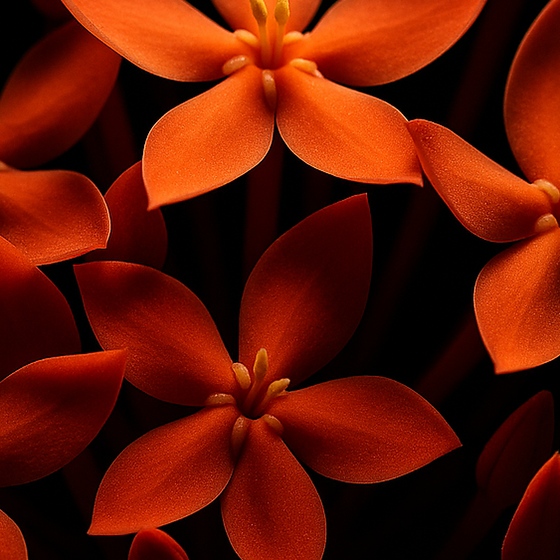
Saraca asoca
Definition
Die Ashoka-Blume ist die Blüte von Saraca asoca, dem Ashoka-Baum, einem kleinen immergrünen Baum, der auf dem indischen Subkontinent heimisch ist. Ihre Blüten duften.
BLUMIG ERDIG WÜRZIG SÜSS WARM
Saraca, Ashoka-Baum, Sita Ashoka
- Typ
- Zutat
- Duftfamilie
- Blumiges
- Quelle
- Blüte
- Chemische Klasse
- komplexes Naturprodukt (ätherisches Öl)
Messwerte
Pyramide
TKopf
HHerz
BBasis
3/5Intensität
Mittel
Geruchsintensität
Erzeugerländer
Indien
Duft
Bei PREMIEREPEAU
Die ganze Geschichte
Wussten Sie schon?
Kamadeva, der hinduistische Gott der Liebe, zählte eine Ashoka-Blüte zu den fünf Blumen in seinem Köcher; dort steht der Ashoka für verführerische Hypnose. Der Ashoka-Baum hat im Sanskrit mindestens 16 verschiedene Namen, die sich auf den Baum oder seine Blüten beziehen.
Extraktion & Chemie
Extraktionsmethode
Methanol gewann die größte Menge an Polyphenolen aus den Blüten.
- Formel
- N/A – natürliche Blüte
- Botanische Bezeichnung
- Saraca asoca
- Aussehen
- Leuchtend orangegelbe Blüten, die sich vor dem Verwelken rot färben
- Geruchsintensität
- Mittel
- Synonyme
- Saraca, Ashoka-Baum, Sita Ashoka
IFRA-Status
Siehe HinweisKein IFRA-Standard für den Rohstoff selbst (51. Amendment)
Physikalische Eigenschaften
- Hinweis
- N/A – kein kommerzieller Extrakt
Siehe auch
10 NotenQuellen
7- Saraca asocaLahore University of Management Sciences
- Nontargeted Identification of the Phenolic and Other Compounds of Saraca asoca by High Performance Liquid Chromatography-Positive Electrospray Ionization and Quadrupole Time-of-Flight Mass SpectrometryISRN Pharmaceutics (2013)
- Extraction optimization of gallic acid, (+)-catechin, procyanidin-B2, (-)-epicatechin, (-)-epigallocatechin gallate, and (-)-epicatechin gallate: their simultaneous identification and quantification in Saraca asocaJournal of Food and Drug Analysis (2017)
- IFRA Standards, 51st AmendmentIFRA
- Saraca asocaWikipedia
- SaracaWikipedia
- Saraca asoca (Roxb.) W.J.de WildeInternational Plant Names Index (IPNI)

