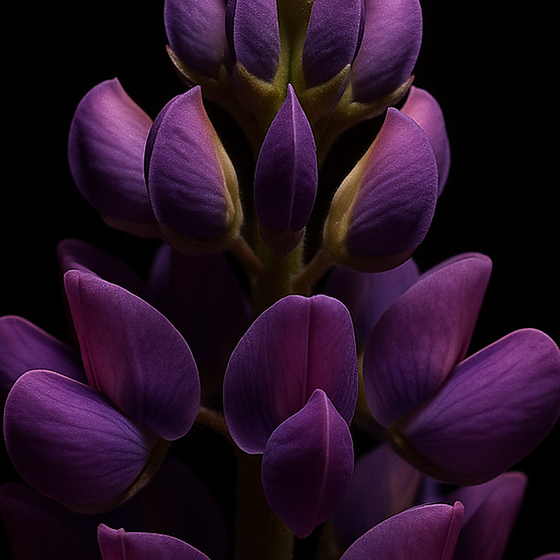
The genus
Lupinus, known as lupin, lupine or regionally bluebonnet, is a genus of plants in the legume family Fabaceae. The genus includes over 199 species, with centres of diversity in North and South America. Smaller centres occur in North Africa and the Mediterranean. The species are mostly herbaceous perennial plants 0.3-1.5 metres (1-5 feet) tall, but some are annual plants and a few are shrubs up to 3 m (10 ft) tall.
The flower and the seed
The flowers are produced in dense or open whorls on an erect spike. The pea-like flowers have an upper standard, or banner, two lateral wings, and two lower petals fused into a keel. The flower shape has inspired common names such as bluebonnets and quaker bonnets. The fruit is a pod containing several seeds. The seeds contain alkaloids which lend them a bitter taste.
Cultivation and uses
Lupins are invasive in some areas, and lupine has become an ecological problem in Iceland since the beginning of the 21st century. The part of the plant that is eaten is the leguminous seed. Because they are bitter and contain strong alkaloids, the seeds must be pickled before consumption to avoid toxicity. The seeds can also be made into a flour and used as fertilizer.
The pearl lupin of the Andean highlands, Lupinus mutabilis, known locally as tarwi or chocho, was extensively cultivated. The seeds of tarwi must be soaked in water for two to four days to remove the water-soluble alkaloids that make them bitter. The seed of Lupinus mutabilis contains 42% protein and 18% fat on average. Users soaked the seed in running water to remove most of the bitter alkaloids and then cooked or toasted the seeds to make them edible.
Low-alkaloid cultivars called sweet lupins have been bred, and are increasingly planted. Three Mediterranean species of lupin (blue lupin, white lupin and yellow lupin) are widely cultivated for livestock and poultry feed. Although lupins are not native to Australia, it has produced 85 percent of commercially grown lupins in the past decade.
Allergy
Lupin allergy may cause life-threatening anaphylaxis in sensitive individuals. In the EU, lupin must be listed as an allergen in pre-packed foods where it has been used.
—
Related: Abelia · Almond Blossom · Alpha Terpineol · Alstroemeria · Alumroot · Amarillys · Amazon Moonflower · Amethyst Flower