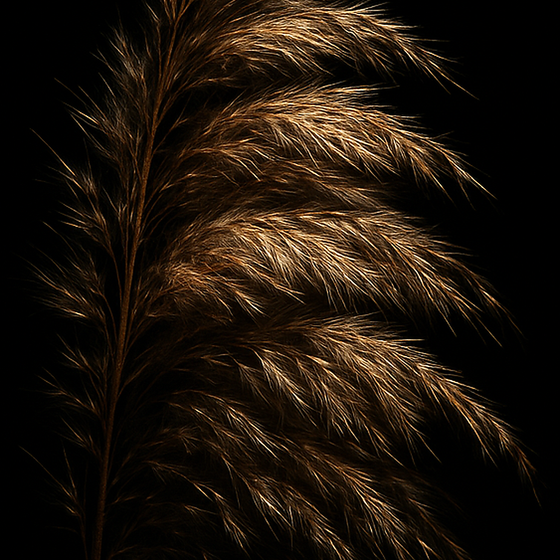
Очерет

АкордЗЕЛЕНІ НОТИ, ТРАВИ Й ФУЖЕРНІ АКОРДИсвіжий · зелений · землистий
Ноти серцяПіраміда
3/5Сила
—Стійкість
·Походження
Зразок
Очерет як парфумерна сировина
Ноти серця
Phragmites australis
Фантазійний/концептуальний
Визначення

Dry, hollow, and faintly sweet — the smell of sun-dried river grass. Reed carries wetl and margins, not water itself: papery stalks, warm starch, and the quiet rustle of Phragmites in wind.

КВІТКОВИЙ ЗЕЛЕНИЙ ЗЕМЛИСТИЙ ТРАВ’ЯНИЙ СВІЖИЙ
CATTAIL
Type
Акорд
Olfactive family
Ароматичні
Source
leaves and flowering tops
Інструменти
Піраміда
ВВерхні ноти
СНоти серця
ББазові ноти
3/5Сила
Середня
інтенсивність запаху
Країни-виробники
Космополіт: росте на всіх континентах, крім Антарктиди

Запах

Dry, papery, and faintly starchy — sun-baked grass stalks rather than fresh-cut lawn. Less sharp than galbanum, less watery than lotus, less green than fig leaf. A quiet, almost transparent note that suggests warm marshland air without any specific green sharpness. The sweetness is minimal — warm starch, not sugar. The dryness is the dominant character: hollow stems, rustling leaves, the vegetal equivalent of parchment.

Докладно

Reed in perfumery captures the margin between water and land — the dry, papery, faintly sweet smell of sun-dried marsh grass. It is not an aquatic note (that territory belongs to water lily, lotus, Calone). It is not a green note in the sharp, galbanum sense. It is specifically the smell of dried stalks: warm starch, hollow stems, the rustling papery quality of Phragmites swaying in a breeze.

No commercial extract of reed exists. The note is a compounded accord, built from dry-green molecules (cis-3-hexenol at low, faded doses), starchy-papery materials (Cashmeran for diffuse warmth, methyl laitone or Habanolide for a clean, textile-like dryness), and grassy-woody undertones (vetiver for rooty depth, lemongrass traces for a hay-like sweetness). Some formulations add a whisper of aquatic molecules — Calone or Hedione — to place the reed near water without submerging it.

The note functions as atmospheric scenery. It sets a territory rather than describing a single material: marshland, riverbank, estuary. It pairs naturally with water-lily, iris, vetiver, and clean musks in compositions that aim for quiet, naturalistic beauty rather than projection or drama.

Explore all seven extraits in the Discovery Set.

—

Related: Alpha Pinene · Angelica · Angelica Root · Angelica Root Oil · Artemisia · Barrenwort · Beachheather · Behini Tree

Цікавий факт

Phragmites australis (common reed) is a widely distributed plants on Earth, found on every continent except Antarctica. A single stand can spread via rhizomes to cover several hectares. The stalks have been used for thatching, paper-making, and musical instruments (clarinet and oboe reeds are cut from Arundo donax, a related species) for at least 5,000 years.

Отримання й хімія

Спосіб отримання

No commercial essential oil or absolute of reed (Phragmites australis) exists in standard perfumery supply chains. The note is a compounded accord. Some artisanal perfumers create tinctures by macerating dried Phragmites stalks in ethanol, yielding a faint, starchy, dry-green liquid, but this is not commercially standardized.

Формула
N/A — olfactory accord
CAS
N/A — olfactory accord
Ботанічна назва
Phragmites australis
Зовнішній вигляд
Colorless to pale green liquid
Сила запаху
Середня
Синоніми
CATTAIL
Статус IFRA
Див. примітку

Not applicable: accord or concept, not a single material

Фізичні властивості
Нота
N/A — olfactory accord / concept

У парфумерії

Reed is an atmospheric accord note in perfumery, evoking the vegetal, papery quality of dried Phragmites or cattail stalks. It functions as a heart-to-base green note that is drier and less sharp than galbanum, less aquatic than water-lily, and more specifically 'marshland' than generic green accords. The note is typically constructed using dry-green molecules (cis-3-hexenol at low doses for a faded-green impression), papery-starchy notes (Cashmeran, methyl laitone), woody-grassy materials (vetiver, lemongrass traces), and sometimes a clean aquatic undercurrent (Calone at trace levels, or Hedione). Reed accords appear in aquatic-naturalistic compositions, garden-themed fragrances, and minimalist green structures where the goal is territory rather than bouquet.

Роль у формулі
01модифікатор
02фірмова нота
03компонент піднесення
04сполучний компонент
05натуралізатор
06формувач об’єму
Форми випуску
стандартна форма

Див. також

7 ноти