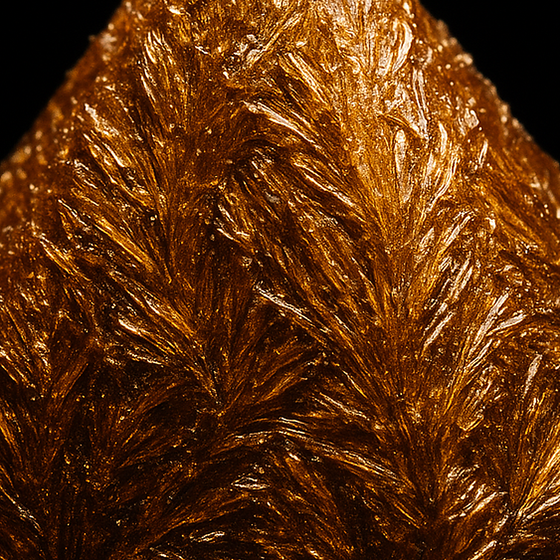
Вінілгваякол

АкордНАТУРАЛЬНІ Й СИНТЕТИЧНІ, ПОПУЛЯРНІ Й НЕЗВИЧНІтеплий · пряний · димний

Сім ароматівОдин із них дивиться на вас

Ноти серцяПіраміда
3/5Сила
—Стійкість
—Походження
Зразок
Вінілгваякол як парфумерна сировина
Ноти серця
N/A — reported in Angelica gigas and Humulus lupulus; one of the compounds responsible for the aroma of buckwheat
Фантазійний/концептуальний
Визначення

4-Vinylguaiacol, also called 2-methoxy-4-vinylphenol, is a phenolic molecule used as a flavouring agent. Its odour is powerful, spicy and clove-like.

ПРЯНИЙ СОЛОДКИЙ ТЕПЛИЙ СВІЖИЙ
2-Methoxy-4-vinylphenol, 4-vinylguaiacol, p-vinylguaiacol, 4-hydroxy-3-methoxystyrene, 4-ethenyl-2-methoxyphenol, 4VG
Type
Акорд
Olfactive family
Пряні
Source
Plant and microbial metabolite; made commercially by chemical decarboxylation of ferulic acid
Chemical class
Phenol (guaiacol bearing a vinyl group)
Інструменти
Піраміда
ВВерхні ноти
СНоти серця
ББазові ноти
3/5Сила
Середня
інтенсивність запаху

Запах

The odour is powerful, spicy and clove-like, with a roasted peanut character. The pure substance has been described as apple, spicy, peanut, wine-like or clove and curry.

Докладно

4-Vinylguaiacol (CAS 7786-61-0) is a phenolic compound formed by the decarboxylation of ferulic acid. It is guaiacol with a vinyl group attached to the fourth carbon. Eugenol, the most abundant molecule in the essential oil of cloves, differs from it only by one added carbon in the residue attached to the fourth carbon of the phenol ring. It is a colourless or pale straw oily liquid.

It is one of the compounds responsible for the natural aroma of buckwheat. It has also been reported in Angelica gigas and Humulus lupulus, and it is an odorant in green tea. During coffee roasting, decarboxylation of ferulic acid yields 4-vinylguaiacol, guaiacol and phenol. Pyrolysis of sugarcane bagasse lignins yields compounds including guaiacol, 4-methylguaiacol and 4-vinylguaiacol. In soft pretzels, it can be generated from hemicelluloses such as arabinoxylans that contain bound ferulic acid, which is liberated during the alkaline treatment of the dough and thermally decarboxylated during baking. 4-Vinylguaiacol is one of the top three odour-active phenols in food, together with vanillin and guaiacol.

Ferulic acid, the precursor of 4-vinylguaiacol, is found in the bran of wheat and barley. Dimers of ferulic acid crosslink the polysaccharides of plant cell walls, and the acid is present in cereal brans and sugar beet pulp. In the mechanism proposed for ferulic acid decarboxylases, the phenolic hydroxyl group is deprotonated and turned into a quinoid intermediate, and the carboxylic group then leaves the molecule as carbon dioxide.

The yeast enzyme involved, cinnamate decarboxylase, is produced by strains with an active form of the POF gene, which include wheat beer yeast strains, most wine strains and many wild yeasts. Most wild strains of Saccharomyces are POF+. Other microbes, including Torulaspora delbrueckii and Pseudomonas fluorescens, can also convert ferulic acid into 4-vinylguaiacol. By varying mashing conditions to release more or less ferulic acid, brewers can somewhat control the amount of spicy, clove flavour in beer. It has been suggested that the clove-like aroma of fresh specialty beers, such as wheat beers and top-fermented Belgian-style ales, may shift toward sweeter, more vanilla-like impressions as they age.

It is applied in the pharmaceutical, cosmetic and food industries. Its commercial price is forty times greater than that of ferulic acid. Some insects, such as the red palm weevil Rhynchophorus ferrugineus, use it for chemical signalling.

Explore all seven extraits in the Discovery Set.

—

Related: Allspice · Anethole · Anise · Asafoetida · Baking Spices · Bay Leaf · Biryani · Caraway

Цікавий факт

Strains of yeast that convert ferulic acid to 4-vinylguaiacol give beers such as Weissbier and Wit their distinctive spicy clove flavour, while most beer and ale strains of Saccharomyces have been selected for the inability to produce it. Its flavour threshold of detection is low, about 200 parts per billion, so it can exert a large influence on the flavour of beer.

Отримання й хімія

Спосіб отримання

4-Vinylguaiacol is produced by decarboxylation of ferulic acid, which can take place thermally, as during woodchip pyrolysis, or enzymatically at mild conditions. In brewing, certain strains of yeast convert ferulic acid to 4-vinylguaiacol during fermentation. Commercial 4-vinylguaiacol is currently obtained by chemical decarboxylation of ferulic acid using metal catalysts under harsh conditions. Enzymatic decarboxylation of ferulic acid released from agro-industrial side-streams by ferulic acid esterases enables the generation of pure, food grade 4-vinylguaiacol. Ferulic acid is particularly rich in agricultural by-products such as corn, rice and wheat bran, and corn hulls. With a phenolic acid decarboxylase from Bacillus atrophaeus in whole Escherichia coli cells, 4-vinylguaiacol reached 1580 mM (237.3 g/L) in a 2 L bioreactor, with a molar conversion yield of 98.9%.

Формула
C₉H₁₀O₂
CAS
7786-61-0
Ботанічна назва
N/A — reported in Angelica gigas and Humulus lupulus; one of the compounds responsible for the aroma of buckwheat
Сила запаху
Середня
Синоніми
2-Methoxy-4-vinylphenol, 4-vinylguaiacol, p-vinylguaiacol, 4-hydroxy-3-methoxystyrene, 4-ethenyl-2-methoxyphenol, 4VG
Статус IFRA
Див. примітку

No IFRA Standard for the material itself (51st Amendment)

Фізичні властивості
Температура кипіння
224 °C @ 760 mm Hg
Відносна густина
1.10500 to 1.11500 @ 25.00 °C.
Показник заломлення
1.57000 to 1.58000 @ 20.00 °C.

У парфумерії

Its flavour profile is given as clove, curry and spice. It is the impact compound of smoke flavour. Enzymatically made 4-vinylguaiacol may be used in clean and safe smoke flavours. A JECFA evaluation found no safety concern at current levels of intake when it is used as a flavouring agent. In beer, it is present in notable concentrations in weissbiers, rauchbiers and some specialty Belgian beers, generally imparting desirable spicy, pungent, clove-like notes. At higher concentrations and under certain conditions it may present as a medicinal, off-flavor note. In more typical types of beer, especially crisp lagers, it is considered an off-flavor.

Роль у формулі
01модифікатор
02фірмова нота
03сполучний компонент
04формувач об’єму
05свіжість
Форми випуску
синтетичний акорд фантазійна нота

Див. також

7 ноти